
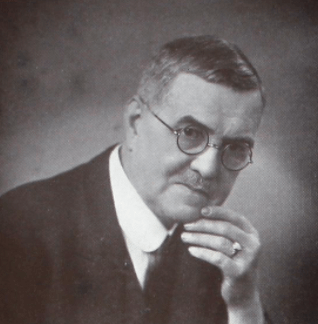
We all admire the story of William Mortan and World Anesthesia Day, but the birth of Veterinary anesthesia is also an interesting story and worth reading. Animal subjects have always been a part of anesthesiology for decades even before 16th October 1846, few references dating back to 4000 BCE. Shortly after Mortan’s public demonstration of anesthesia, on 29th January 1847 Ether was successfully used to anesthetize a horse patient by William Sewell, the principal of Royal Veterinary College, London. This was marked as the “First use of veterinary anesthesia” in the Times of London. It could potentially be World Veterinary Anesthesia Day!
Ether was soon replaced with Chloroform as it was found better in many aspects like, less quantity of Chloroform produced the same effect, it showed its action faster than Ether, it had a pleasant smell and administration was less expensive as it did not need special equipment.
As history goes, scientific advancements were incomplete without a strong backlash. In the second half of 19th century many studies were performed on lab animals, dogs and horses using various drugs for spinal anesthesia. But it was very unfortunate that till the second half of 20th century, veterinary surgeries were performed under a “heavy hand” that is, without sedating or anesthetizing the animals. Because the thought of “animals feel pain” was neglected then. In 1915, Merillat wrote in his textbook on Veterinary Surgery:
Anesthesia is used in a kind of desultory fashion that reflects no great credit to the present generation of veterinarians. Many experienced surgeons have never in their lifetime administered a general anesthetic. So long as an operation can be performed by forcible restraint without imminent danger to the technique, the operator or the animal, the thought of anesthesia does not enter into the proposition
The use of Chloroform to relieve pain during childbirth was strongly opposed by the Church- as Bible is pretty clear that women were destined to suffer for Eve’s original sin of tempting Adam. These negative beliefs were backed by large number of deaths due to anesthesia in both human and animal patients. Chloroform was considered dangerous for dogs and cats compared to horses. Loss of lives was a frequent occurrence.
It is Hobday who deserves all the credit to defend veterinary anesthesiology. He advocated use of Cocaine as local and regional anesthesia in animals, developed a special surgery table to restrain chloroformed dogs and cats, and designed an apparatus to give a steady flow of Chloroform in a controlled concentration.
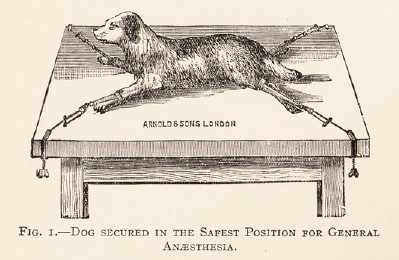
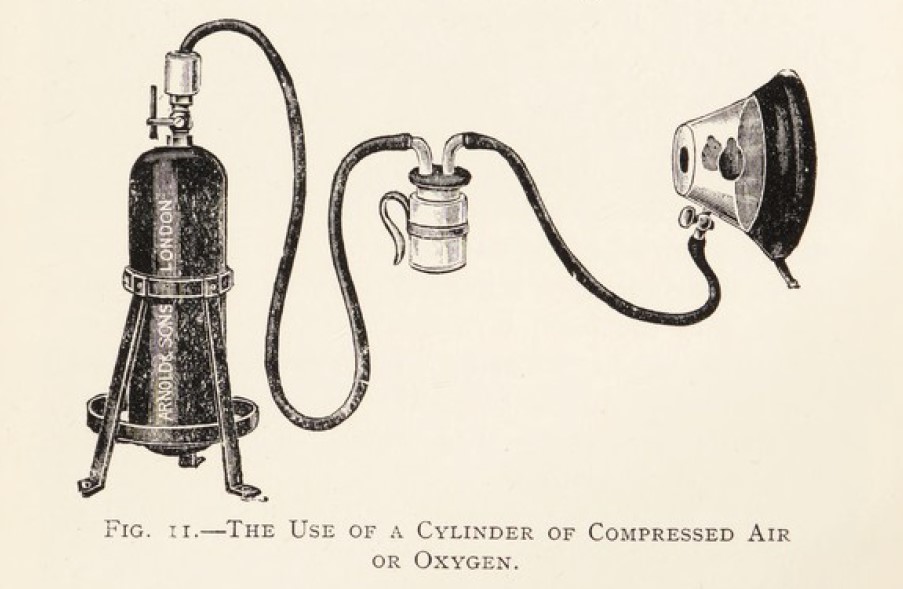
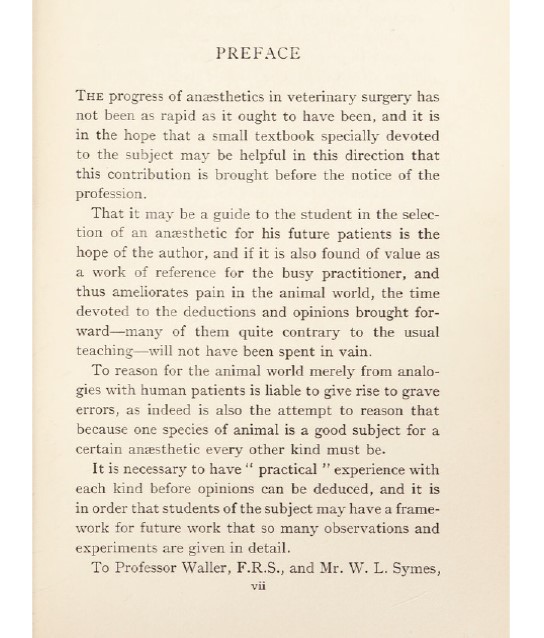
He demonstrated and published 900 cases of Chloroform anesthesia with only five deaths. These numbers were of great significance for those times where anesthesia was outrightly rejected by doctors, society and the religious faith. Hobday, in 1915, published the first English textbook completely devoted to veterinary anesthesia- Anaesthesia and Narcosis of Animals and Birds. It had literature on inhalant anesthesia, local, regional and spinal anesthesia, use and advantages of premedication. Considering comments from Merillat and Hobday, Animals Anesthetic Act, 1919 was formed which made use of anesthesia mandatory for many operations. The act further became a law by public demand and paved the way to practice veterinary anesthesia as we know it today!
The modern concept of anesthesia has three aspects which we call the Anesthesia triad, first being reversible unconsciousness or amnesia, second is analgesia or to minimize pain, and third is muscle relaxation. Veterinary anesthesiology is not only limited to surgeries but is also required to perform diagnostic tests like radiographs, ultrasound, biopsies, CT scan, MRI; immobilization and transport of wild animals; therapeutic procedures like radiation therapy, dental procedures and for euthanasia.
Any anesthetic drug works by depressing the activity of nervous tissue either locally, which we call local anesthesia; regionally i.e. regional blocks, or within the CNS which is general anesthesia. To understand how exactly this happens, look at the images of nerve arc and neurotransmission, with a magnified portion of dendron passing on its neurotransmitters to axon.
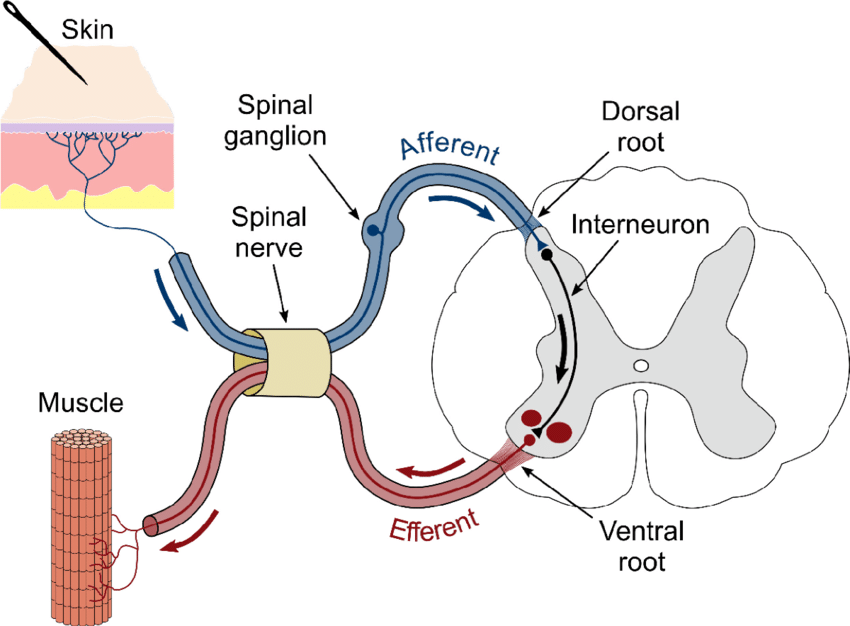
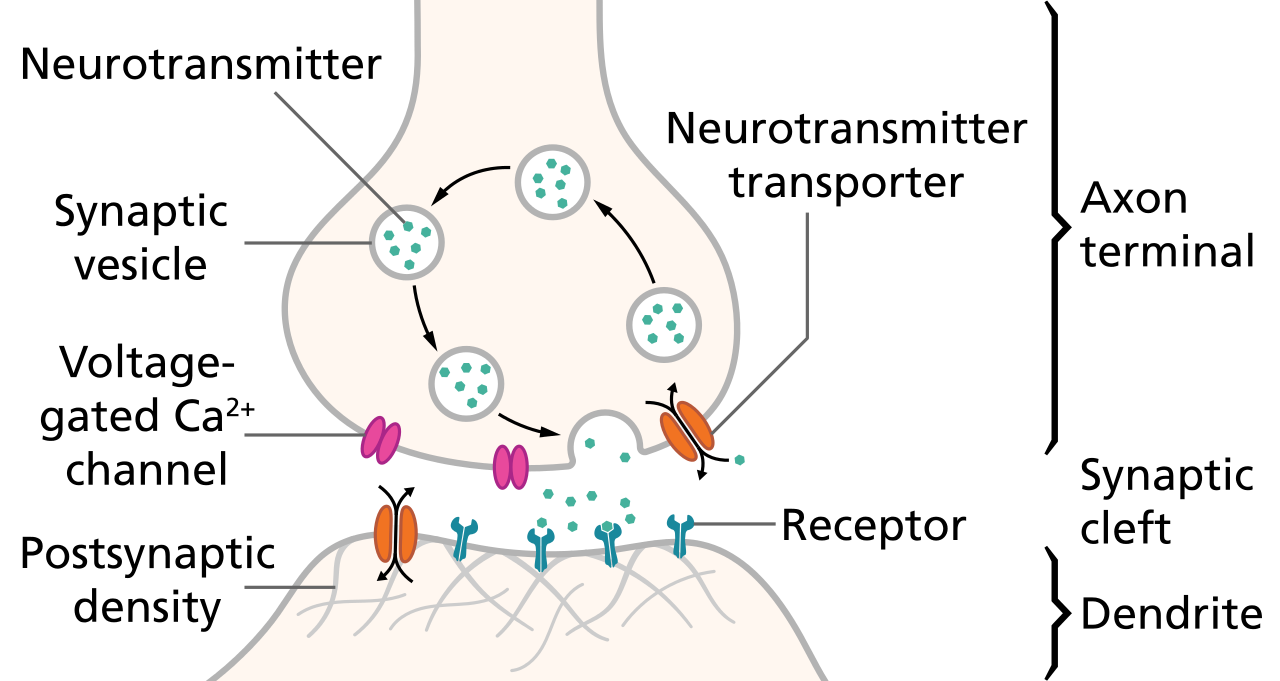
Nervous system is the most accurate game of Chinese whisper. In simple words, our nerves pass on messages to each other in the form of nerve impulses which run down from brain to spinal cord through millions of neurons till it reaches the effector organ and the other way around from receptor organ through neurons, to the spinal cord and finally to the brain. To pass on this message, there are two kinds of neurotransmitters, excitatory and inhibitory. Anesthetic drugs either block the excitatory ones like norepinephrine, glutamate, acetylcholine, dopamine, histamine; or they help release more inhibitory neurotransmitters like gamma aminobutyric acid, glycine and serotonin which depress the CNS.
Despite many advancements in the field, our clients are apprehensive for their pets to undergo an elective surgery or also an emergency procedure. There seems to be a lack of awareness amongst layman regarding methods of surgery in animals. Few have no clue that use of general anesthesia, pain killers and gas anesthesia is a routine in veterinary clinics! Many of these preoperative conversations are funny. But their hesitation is quite natural. One would think twice before putting their loved ones under the knife and anesthesia. Reality is that surgery is a risk we have to undertake to improve the patient’s quality of life. And the only way to perform surgeries humanely is by using anesthesia. Things can go wrong at any moment. Transitioning a patient from consciousness to unconsciousness consists of incredibly complex steps. Making a small error or miscalculation can lead to dire consequences because the drugs used for this transition have very narrow safety index.
In early 1900s, when the Church opposed use of anesthesia, James Simpson- a Scottish physician and a religious man cited Genesis 2: 21-22 and argued that God caused Adam to fall into “a deep sleep” and removed his rib to create Eve. Technically, God was the first anesthetist! He was later backed by Queen Victoria who “was most gratified with the effect of Chloroform” after two child births. This ended decades of rejection that anesthesiology underwent and thus became an indispensable part of surgery. With inventions of new techniques and discovery of versatile drugs, deaths due to anesthesia in veterinary surgeries have come down to 0.25-0.60%, compared to almost 100% two centuries ago. I am proud to be one of the professional descendants of Sir Frederick Hobday and contribute of this profession.
Edited by Prajakta Alase
Citations:
Hobday, F.T., 1915. Anaesthesia & narcosis of animals and birds. Baillière, Tindall and Cox.
Grimm, K.A., Lamont, L.A., Tranquilli, W.J., Greene, S.A. and Robertson, S.A. eds., 2015. Veterinary anesthesia and analgesia. John Wiley & Sons.
By Thomas Splettstoesser (www.scistyle.com) – Own work, CC BY-SA 4.0, https://commons.wikimedia.org/w/index.php?curid=41349083


 AnesWise blog
Leave a comment